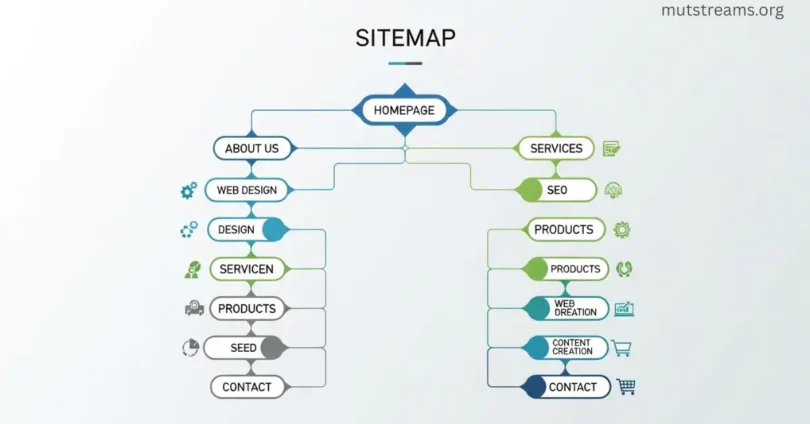

A sitemap is like a map for your website. It shows all the pages, posts, and important content in one place so that both visitors and search engines can easily find them. Just like a city map helps people reach their destination, a sitemap helps search engines like Google explore your website faster and understand what your site is about. Whether your website is big or small, having a sitemap makes it easier for everyone to navigate and ensures your content gets noticed.
How a Sitemap Helps Your Website
A sitemap is more than just a list of pages. It helps your website grow, get noticed, and perform better online.
- Faster Indexing: Search engines find new pages quickly.
- Better SEO: Helps your website rank higher in search results.
- Easy Navigation: Visitors can move around your site smoothly.
- Highlights Important Pages: Shows which pages are most important to search engines.
- Reduces Broken Links: Makes it easier to spot missing or broken pages.
- Supports Large Websites: Helps big websites organize hundreds of pages clearly.
A well-planned sitemap keeps your website organized, helps search engines understand it, and makes it easier for users to explore.
Types of Sitemaps
Sitemaps come in different types, each serving a special purpose for websites and search engines.
- XML Sitemap: Designed for search engines to understand your website structure easily.
- HTML Sitemap: Helps visitors navigate your website and find content quickly.
- Image Sitemap: Shows all the images on your website to improve search visibility.
- Video Sitemap: Lists videos on your site, helping them appear in search results.
- News Sitemap: Specially for news websites to get content discovered faster.
- Mobile Sitemap: Optimized for mobile-friendly pages to ensure they are indexed.
Choosing the right type of sitemap ensures both search engines and visitors can explore your website efficiently.
Key Elements of a Sitemap
A sitemap works best when it includes important details about your website pages.
- URL of Pages: The exact link of every page on your website.
- Last Modified Date: Shows when the page was updated last.
- Priority: Tells search engines which pages are more important.
- Update Frequency: Indicates how often a page changes (daily, weekly, monthly).
- Page Type: Optional info like images, videos, or news content.
- Alternate Language Links: For websites with content in multiple languages.
Including these key elements makes your sitemap clear, organized, and helpful for both users and search engines.
How to Create a Sitemap
Creating a sitemap is simple if you follow a few clear steps to organize your website.
- Choose Sitemap Type: Decide whether you need an XML sitemap for search engines or an HTML sitemap for visitors.
- List All Pages: Write down all pages, posts, and important content on your website.
- Add Page Details: Include last modified date, priority, and update frequency for each page.
- Use Tools or Plugins: Use online sitemap generators or website plugins like Google XML Sitemaps or Yoast SEO.
- Save and Upload: Save the sitemap file (usually XML) and upload it to your website’s root folder.
- Check for Errors: Ensure all links are correct and the sitemap is accessible.
Following these steps makes your sitemap accurate, easy to use, and ready for search engines to explore your website.
Submitting Sitemap to Search Engines
After creating a sitemap, submitting it to search engines helps your website get discovered faster.
- Submit to Google Search Console: Add your sitemap URL in Google Search Console for faster indexing.
- Submit to Bing Webmaster Tools: Upload your sitemap to Bing to reach users on Microsoft’s search engine.
- Update After Major Changes: Resubmit the sitemap whenever you add or remove important pages.
- Check for Errors: Ensure search engines can read your sitemap without issues.
- Monitor Performance: Use search console reports to see how your pages are being indexed.
Submitting your sitemap ensures search engines can easily find and display all your website content.
Common Sitemap Mistakes to Avoid
Even a small mistake in a sitemap can confuse search engines and affect your website’s visibility.
- Missing Pages: Forgetting to include all important pages on your website.
- Broken Links: Including links that don’t work or lead to error pages.
- Wrong File Format: Using an incorrect format instead of XML or HTML.
- Not Updating Regularly: Failing to update the sitemap after adding or removing content.
- Duplicate URLs: Listing the same page multiple times can confuse search engines.
- Incorrect Priority or Frequency: Giving wrong information about how often pages update or their importance.
Avoiding these mistakes keeps your sitemap accurate and helps search engines index your website correctly.
Future of Sitemaps
Sitemaps are evolving as websites, search engines, and technology continue to change.
- AI-Powered Sitemaps: Artificial intelligence may create and update sitemaps automatically.
- Voice Search Optimization: Sitemaps may include structured data to support voice queries.
- Mobile-First Sitemaps: More focus on mobile-friendly pages as mobile traffic grows.
- Video and Multimedia Focus: Sitemaps will better highlight videos, images, and other media.
- Real-Time Updates: Future sitemaps may update instantly when content changes.
- Integration with Analytics: Sitemaps may link directly with performance tools for better insights.
The future of sitemaps will make websites easier to navigate, faster to index, and smarter for both users and search engines.
Common FAQs about Sitemap
Some FAQs of Sitemap
What is a sitemap in simple words?
A sitemap is a file that lists all pages and content on a website so search engines can find them easily.
Do I need a sitemap for a small website?
Yes, even small websites benefit because it helps search engines discover every page.
Can a sitemap improve my website’s ranking?
Indirectly, yes. It makes sure all pages are indexed, which can help your SEO.
How often should I update my sitemap?
Update it whenever you add, remove, or change important pages on your website.
Can images and videos be included in a sitemap?
Yes, you can include images, videos, and other media to help search engines index them.
What is the best format for a sitemap?
XML is the most common format for search engines, while HTML is helpful for visitors.
Will a sitemap fix broken links automatically?
No, a sitemap only lists pages. Broken links must be fixed manually or with a tool.
Can multiple sitemaps be used for one website?
Yes, large websites can use multiple sitemaps for different sections or media types.
Is a sitemap visible to website visitors?
HTML sitemaps are visible to visitors, but XML sitemaps are mainly for search engines.
How do search engines know my sitemap exists?
You submit it to search engines using tools like Google Search Console or include it in your robots.txt file.
Conclusion
A sitemap is more than just a list of pages it is a powerful tool that organizes your website and guides search engines effectively. Beyond helping with indexing, a well-structured sitemap can reveal hidden pages, highlight seasonal or promotional content, and improve user experience by making navigation smoother. Keeping your sitemap updated and accurate also allows you to spot outdated or low-performing pages quickly. In today’s fast-growing web, a sitemap ensures that your website stays visible, structured, and ready for new opportunities.